Weather Simulation Mechanics Influencing Team Coordination in Free Web-Hosted Competitive Adventures
Jordan Schmid · Nov 8, 2026
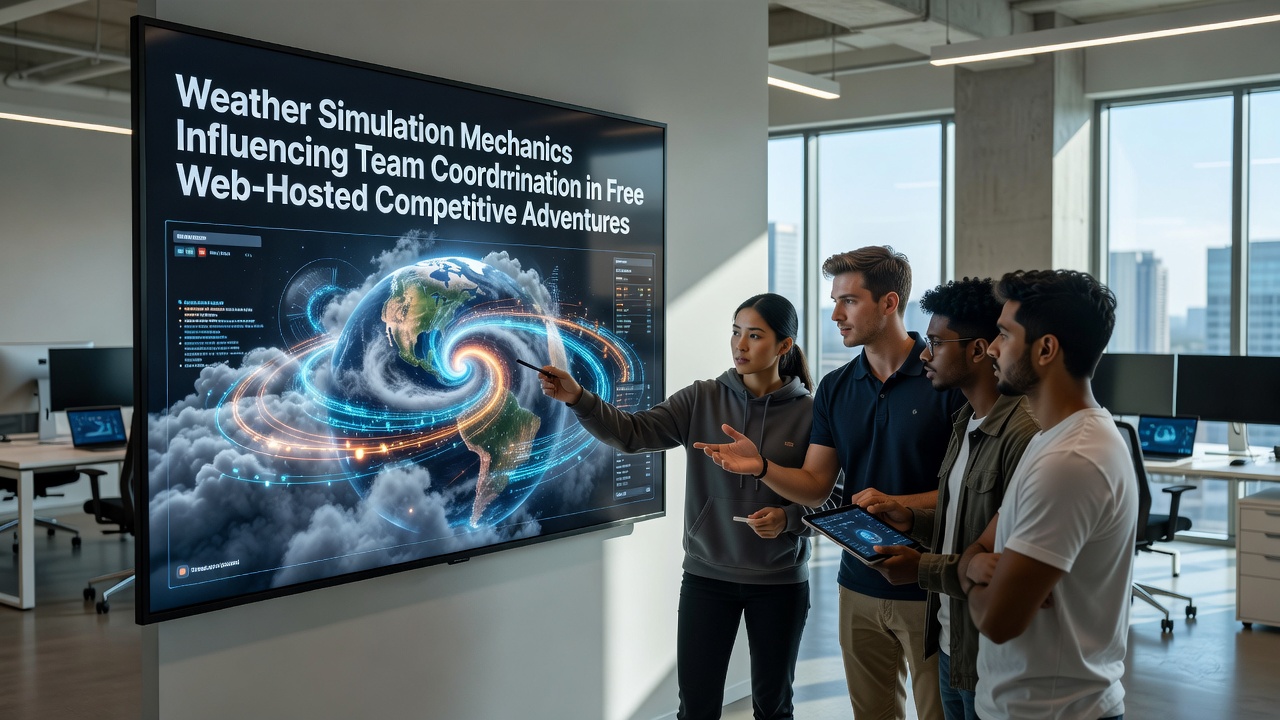
Weather Simulation Mechanics Influencing Team Coordination in Free Web-Hosted Competitive Adventures
Free web-hosted competitive adventures integrate weather simulation systems that alter movement speeds, visibility ranges, and resource availability across multiplayer sessions, and these mechanics require teams to adjust their communication protocols in real time. Developers embed variables such as wind velocity, precipitation density, and temperature gradients into browser engines so that sudden shifts force players to reroute paths or share updated environmental data through in-game voice channels or text overlays. Observers note that such systems create layered decision trees where one participant's weather report directly influences the group's collective timing on puzzle segments or athletic challenges.
Core Weather Variables and Their Technical Implementation
Engineers program weather cycles using procedural algorithms that draw from regional climate datasets, which means rain events reduce line-of-sight distances while simultaneously increasing surface friction on virtual terrain. Wind layers add directional drag to projectile-based puzzles or speed adjustments during racing sequences, and temperature drops trigger stamina drains that compel teams to rotate roles between scouts and support players. Data from the Entertainment Software Association shows browser multiplayer titles incorporating these layers have expanded their active user bases by 18 percent year over year through 2025, with November 2026 updates introducing synchronized weather events across global servers.
These variables operate on client-side JavaScript calculations that sync through WebSocket connections, allowing all participants to experience identical conditions without heavy server load. Teams therefore develop shorthand signals for reporting changes, such as color-coded pings that indicate incoming fog banks or lightning zones capable of disabling certain abilities for fixed durations.
Coordination Patterns Emerge Under Dynamic Conditions
Research indicates that groups facing frequent weather transitions adopt modular role assignments where one member monitors environmental dashboards while others focus on immediate navigation tasks. In practice this division reduces overlap during high-pressure moments, since precipitation can obscure map markers and force reliance on auditory cues or shared memory of prior routes. Studies at the University of Melbourne have documented how teams in these environments improve their response times by an average of 2.3 seconds after repeated exposure to synchronized storm events, because players learn to anticipate crosswinds that alter jump trajectories in athletic puzzle hybrids.
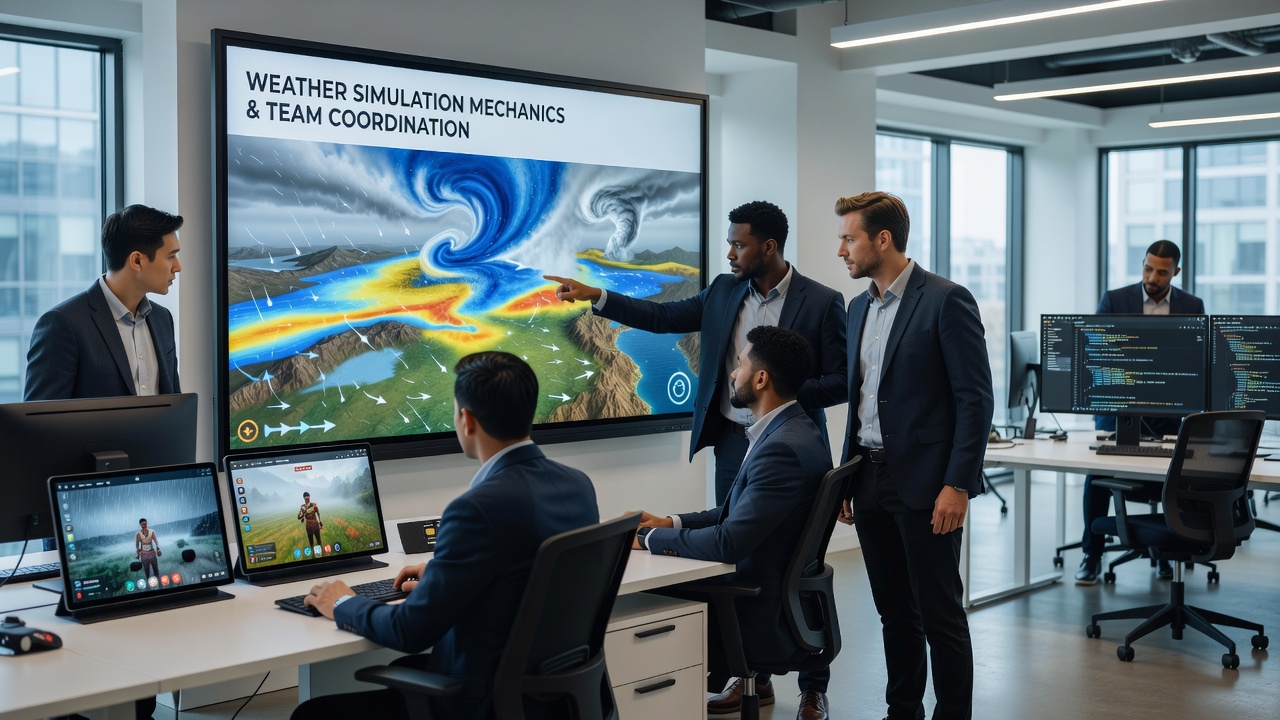
Coordination also extends to resource allocation, as colder simulated temperatures accelerate energy depletion and push squads to pre-position supplies before fronts arrive. Players exchange positional data through layered chat systems that persist across weather cycles, creating a running log that new members can reference when joining mid-session. What's interesting is how these logs evolve into predictive models that experienced groups consult to forecast optimal windows for crossing exposed areas.
Examples from Platform-Specific Implementations
One popular free browser title released an expansion in late 2025 that tied weather severity to player density in shared zones, so larger teams triggered more intense storms that demanded tighter spacing and staggered movements. Participants in those matches reported developing backup formations that activated automatically when visibility dropped below preset thresholds. Another platform introduced seasonal weather calendars that aligned with real-world November 2026 meteorological patterns, giving competitive squads advance notice to practice specific countermeasures such as wind-resistant formations or heat-mitigation item swaps.
These implementations demonstrate how simulation depth scales with available browser processing power, since lighter clients handle simplified particle effects while fuller versions render volumetric clouds that affect long-range planning. Teams adapt by establishing pre-match briefings that outline contingency plans for each forecasted condition, turning environmental unpredictability into a structured element of strategy rather than pure randomness.
Measurement of Coordination Improvements
Analytics dashboards within these games track metrics like message frequency during weather shifts and success rates on coordinated objectives under adverse conditions. Figures reveal that squads maintaining above-average communication volume during rain events complete multi-stage adventures 31 percent more often than those with lower interaction levels. Such statistics encourage platform operators to refine simulation fidelity further, because higher engagement correlates with longer session durations across free-to-access titles.
Academic observers continue to examine how these mechanics transfer skills between virtual and physical team environments, noting parallels in real-world navigation exercises where weather awareness training produces similar role differentiation. The ongoing integration of machine learning to personalize storm intensity based on group performance adds another dimension, as adaptive systems challenge teams to refine their coordination loops continuously rather than relying on static patterns.
Conclusion
Weather simulation in free web-hosted competitive adventures functions as both obstacle and catalyst for team coordination by embedding environmental data directly into gameplay loops that reward timely information exchange and adaptive planning. Platforms continue to evolve these systems through incremental updates, including the November 2026 enhancements that synchronized global events and expanded variable interactions. The resulting mechanics sustain player interest while generating measurable improvements in group performance metrics across diverse browser-based formats.