Visual Cue Hierarchies Directing Collective Paths in Free Browser Multiplayer Arcade Sports Narratives
Logan Klein · Aug 5, 2026
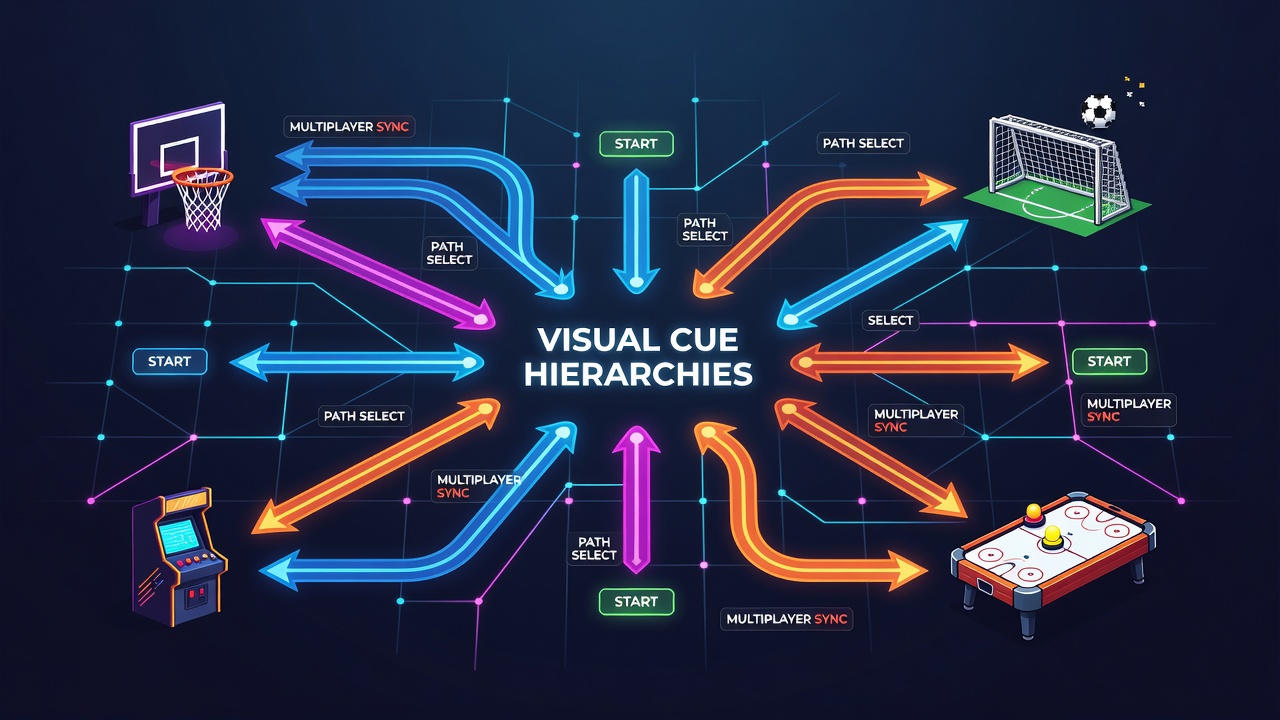
Visual Cue Hierarchies Directing Collective Paths in Free Browser Multiplayer Arcade Sports Narratives
Visual cue hierarchies shape how groups navigate shared spaces in free browser multiplayer arcade sports narratives, where layered indicators such as color gradients, size variations, and directional markers establish priorities that players interpret together. These systems appear in titles blending athletic competition with story progression, and they allow scattered participants to align movements without voice chat or text overlays. Data from industry tracking shows browser platforms hosted millions of concurrent sessions in 2025, with similar patterns continuing into the following year.
Core Mechanisms Behind Visual Prioritization
Designers arrange visual elements so that brighter or larger cues draw immediate attention while subtler ones signal secondary objectives, and this ordering helps teams decide routes through virtual arenas during timed matches. In practice, a glowing boundary line might override a faint icon trail, directing the collective toward a narrative checkpoint rather than scattered collectibles. Observers note that such layering reduces miscommunication because participants read the same environmental language regardless of individual device settings or connection speeds.
Studies on perception in digital environments indicate that consistent color mapping across sessions improves response times by measurable margins, and developers apply these findings when updating free arcade sports hybrids. In August 2026 several platforms introduced refined cue systems that adjusted saturation levels based on player density, allowing larger groups to maintain formation even when screen clutter increased.
Coordination in Narrative-Driven Matches
Free browser games often embed story branches inside competitive rounds, so visual hierarchies guide squads toward plot-relevant zones while still permitting individual scoring opportunities. A primary arrow might point toward an advancing opponent wave, yet secondary markers highlight hidden narrative items that unlock group rewards when collected in sequence. This dual structure encourages synchronized decisions, and teams that follow the established order report higher completion rates for shared objectives according to aggregated platform metrics.
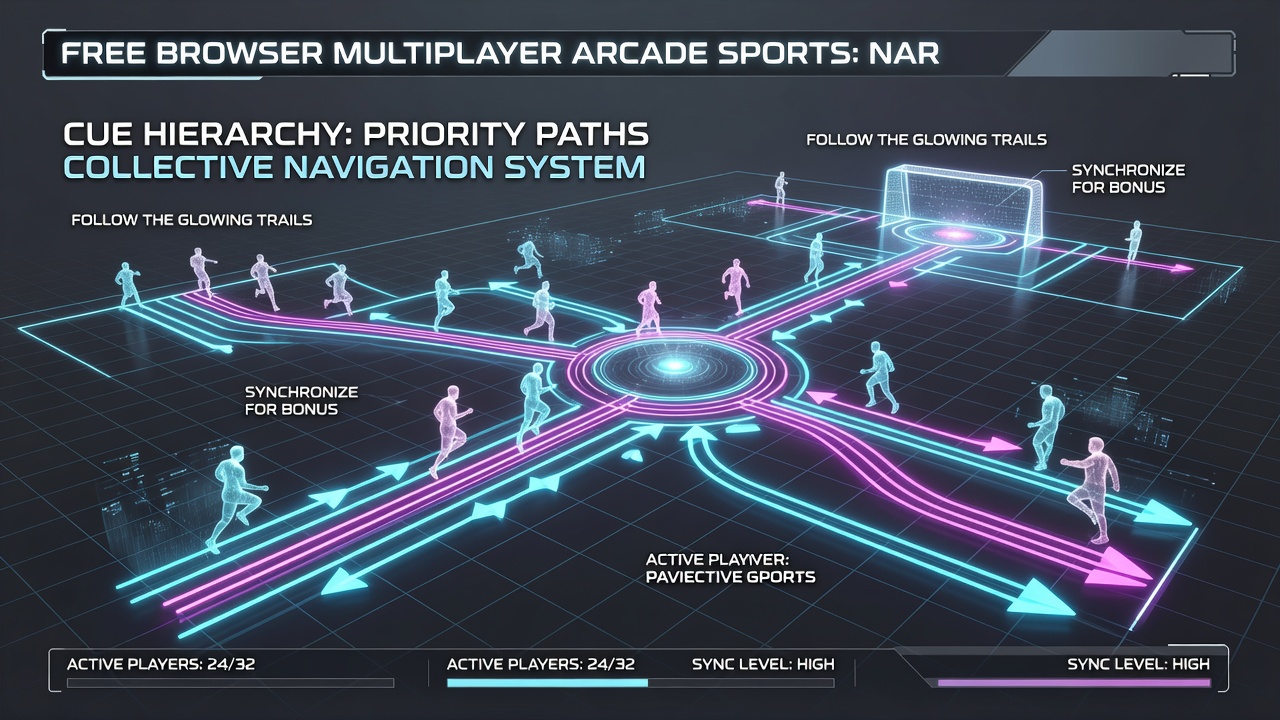
One documented case involved a browser football variant where color shifts on the field indicated both ball trajectory and story triggers, and participants learned to defer to the brightest signals during critical phases. Researchers at the University of Melbourne documented similar patterns in their analysis of visual processing during collaborative digital play, noting that hierarchical cues lowered coordination errors across diverse age groups.
Technical Implementation Across Platforms
Browser engines render these cue systems through lightweight scripts that adapt to varying hardware, and the result is stable performance even on older devices common in public access settings. Developers prioritize vector-based indicators over heavy textures so that hierarchies remain legible when multiple users occupy the same view. Updates rolled out in mid-2026 refined how cues scale with participant numbers, preventing dominant signals from overwhelming smaller details during peak hours.
Industry reports compiled by the Interactive Software Federation of Europe highlight that browser-based sports titles incorporating such systems retained users longer than comparable releases without structured visuals. The data covers sessions across European markets and shows consistent preference for environments where collective paths emerge naturally from environmental design rather than explicit instructions.
Player Adaptation and Long-Term Patterns
Repeated exposure leads groups to internalize cue rankings, and experienced players anticipate changes in hierarchy during narrative shifts without needing extra prompts. This adaptation appears across regions, from North American public libraries hosting after-school sessions to Australian community centers running weekend tournaments. Platform logs indicate that teams mastering these visual languages complete story arcs faster while maintaining competitive standings in arcade scoring.
Adjustments to cue contrast based on accessibility standards further broadened participation, and developers incorporated feedback from color-vision diverse users when refining August 2026 releases. The outcome is broader accessibility without sacrificing the clarity that allows large groups to move as coordinated units through shared athletic narratives.
Conclusion
Visual cue hierarchies continue to influence how participants traverse free browser multiplayer arcade sports experiences, providing a silent framework for collective decision-making inside narrative structures. Ongoing refinements in rendering and contrast management sustain these systems as browser technology evolves, and usage statistics through 2026 confirm their role in supporting both competitive balance and story progression across global player bases.