Tick rate variations reshaping precision timing across group web-hosted sports strategy hybrids
Ben Becker · Aug 26, 2026
Tick rate variations reshaping precision timing across group web-hosted sports strategy hybrids
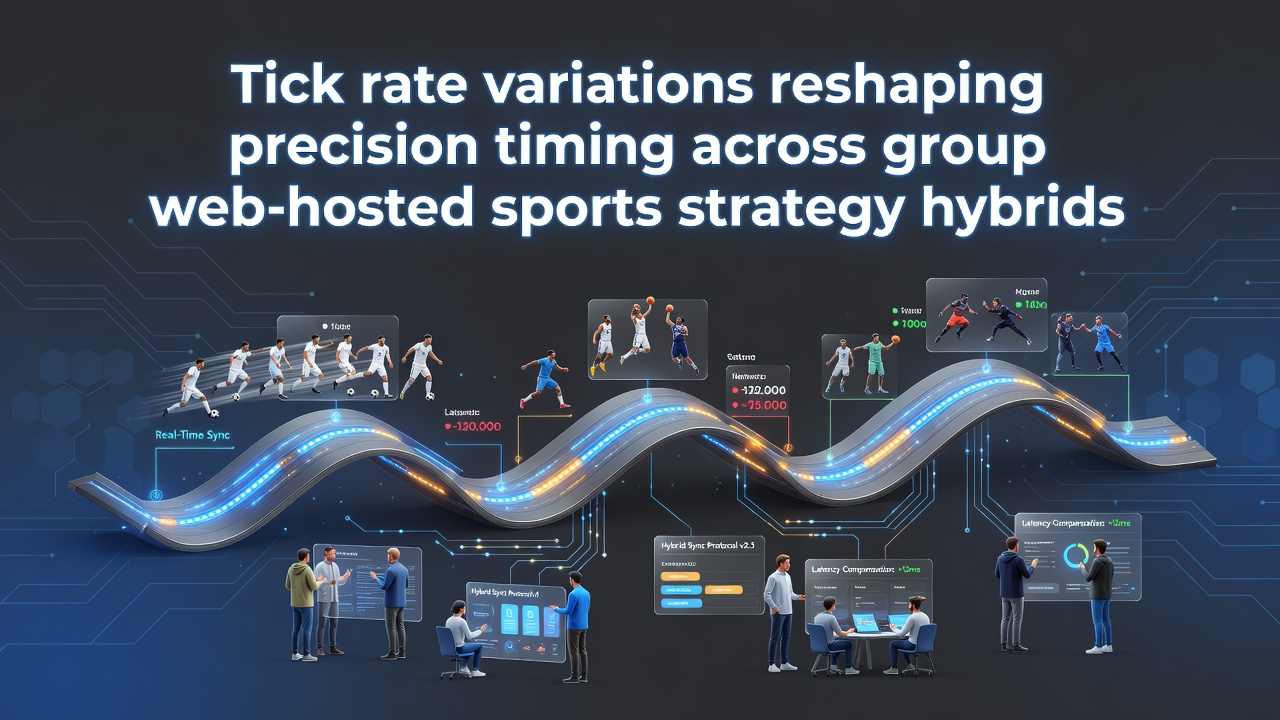
Tick rate variations have become a central factor in how precision timing operates within group web-hosted sports strategy hybrids, where browser-based platforms host multiplayer sessions that blend athletic simulations with layered decision trees and coordinated team actions. These systems rely on server update frequencies that range from 20Hz in lighter browser implementations to 64Hz or higher in optimized environments, and developers adjust these rates to balance latency, bandwidth consumption, and synchronization accuracy across distributed player groups.
Core mechanics of tick rate in browser environments
Web-hosted platforms transmit game state updates at intervals determined by tick rate, which dictates how often the server processes inputs and reconciles positions, timers, and strategic overlays. In sports strategy hybrids that incorporate puzzle elements and collective maneuvers, lower tick rates introduce noticeable delays in action resolution, while higher rates reduce the window for desynchronization during critical moments such as simultaneous player decisions or timed athletic sequences. Research from network performance studies shows that variations in these rates directly influence the granularity of timing windows available to teams coordinating across different geographic regions.
Browser constraints further shape these dynamics because WebSocket connections and client-side rendering introduce additional variables compared with dedicated client applications. Observers note that developers often implement adaptive tick systems that scale based on participant count and connection quality, allowing the same game instance to maintain playable conditions whether four or forty players join a session.
Effects on precision timing and group coordination
Precision timing suffers measurable degradation when tick rates drop below thresholds required for the specific mechanics of a given hybrid title. Data indicates that actions requiring sub-50-millisecond resolution, such as intercepting a virtual pass or executing a chained puzzle solution during an athletic phase, lose consistency at 30Hz compared with 60Hz implementations. Teams operating under mismatched tick conditions across regions experience compounded errors because each client receives state updates at slightly different intervals, which disrupts the shared temporal framework necessary for synchronized strategies.
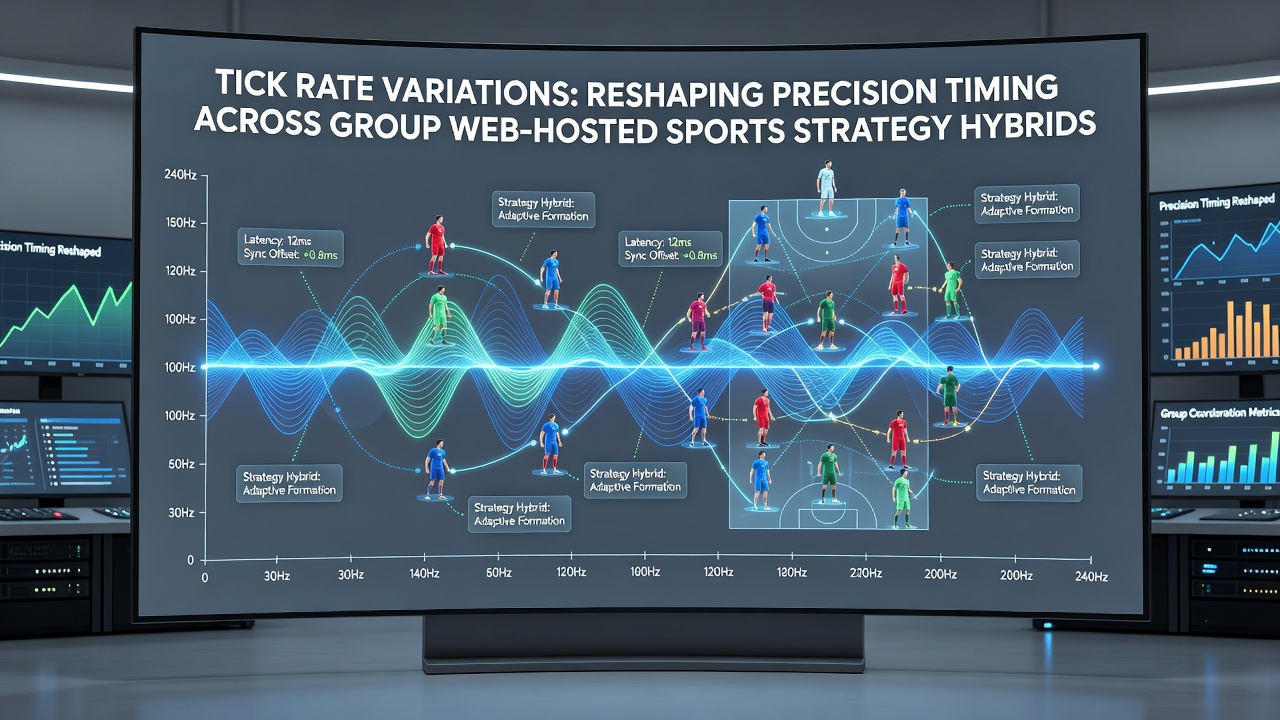
Industry reports compiled by the Entertainment Software Association highlight that titles released or updated through mid-2026 increasingly incorporate client-side prediction layers to compensate for tick rate shortfalls, yet these layers cannot fully eliminate discrepancies when multiple players issue conflicting inputs within the same tick window. In August 2026, several platforms deployed incremental server upgrades that raised average tick rates by 15 to 20 percent for peak-hour sessions, resulting in documented improvements in timing accuracy during group athletic events.
Regional infrastructure influences and technical adaptations
Infrastructure differences across continents affect achievable tick rates, with North American and European data centers supporting higher sustained frequencies than some Asia-Pacific regions during high-traffic periods. A study conducted by the Fraunhofer Institute for Open Communication Systems examined latency distributions in browser multiplayer environments and found that tick rate adjustments made in response to regional packet loss patterns helped stabilize precision elements in strategy hybrids. Developers respond by deploying region-specific tick profiles that prioritize either responsiveness or stability depending on measured network conditions.
These adaptations extend to how game logic partitions timing-critical events. Sports sequences that demand exact frame alignment receive higher tick allocation, whereas background strategy calculations operate on slower cycles to conserve resources. Such partitioning preserves overall session coherence while directing computational focus toward moments where timing precision determines collective outcomes.
Emerging patterns in 2026 platform updates
Platform operators have begun publishing tick rate telemetry alongside match statistics, giving participants visibility into the update frequencies active during their sessions. This transparency allows teams to adjust play styles based on prevailing conditions rather than assuming uniform server behavior. Figures from European network monitoring agencies reveal that sessions operating above 50Hz demonstrate reduced variance in timing-sensitive metrics, particularly in hybrids that combine rapid athletic inputs with slower strategic planning phases.
Continued refinement of these systems points toward dynamic tick scaling that responds in real time to detected coordination breakdowns, further narrowing the gap between browser-hosted experiences and those delivered through native applications.
Conclusion
Tick rate variations continue to define the boundaries of precision timing in group web-hosted sports strategy hybrids, shaping how teams synchronize actions across distributed browser sessions. Technical adaptations and infrastructure considerations determine the practical limits of these systems, while ongoing platform updates in 2026 demonstrate measurable progress in aligning update frequencies with the demands of complex multiplayer timing requirements.