Temporal Distortions Reshaping Team Dynamics in Browser-Hosted Free Sports Adventure Games
Jakob Keller · Aug 14, 2026
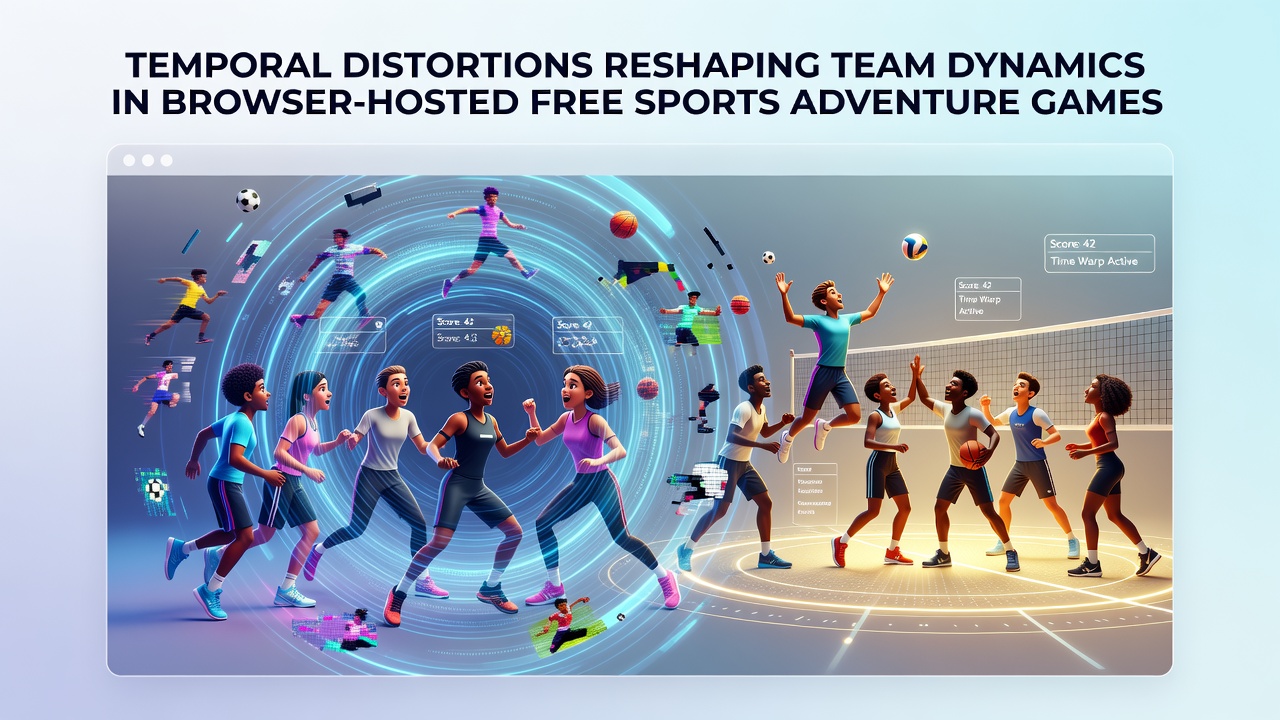
Temporal Distortions Reshaping Team Dynamics in Browser-Hosted Free Sports Adventure Games
Browser-hosted free sports adventure games have incorporated temporal distortion mechanics that allow players to manipulate time flow during matches, and these features now influence how teams coordinate their actions across multiple sessions. Developers integrate time-slowing sequences, short rewinds, and localized loops into core gameplay loops so that athletic challenges blend with puzzle-like decision points. Data from industry reports indicate that participation in these hybrids rose steadily through 2025 and into August 2026, with browser platforms hosting the majority of free-to-access titles that combine racing, team sports, and exploration elements.
Core Mechanics Behind Time Manipulation
Teams encounter temporal tools that pause or reverse brief segments of play while maintaining overall match progression, which forces players to synchronize their inputs in real time even when individual perspectives diverge. A forward on a virtual pitch might trigger a slow-motion window to set up a pass, yet the goalkeeper on the opposing side receives an immediate rewind option that alters the same sequence from another angle. Observers note that successful squads develop shared timing cues rather than relying on solo reflexes, because one member's distortion choice directly affects the spatial positions available to teammates seconds later.
Shifts in Coordination Patterns
Research conducted by university labs in Canada and published through the Entertainment Software Association shows measurable changes in communication frequency when temporal layers activate during matches. Players exchange more positional updates in voice or text channels during distortion windows, and pre-planned strategies give way to adaptive callouts that reference specific time offsets. In one documented case, a European development team adjusted its training modules after telemetry revealed that squads using collective rewind signals achieved higher completion rates on multi-stage adventure routes than those treating distortions as individual power-ups.
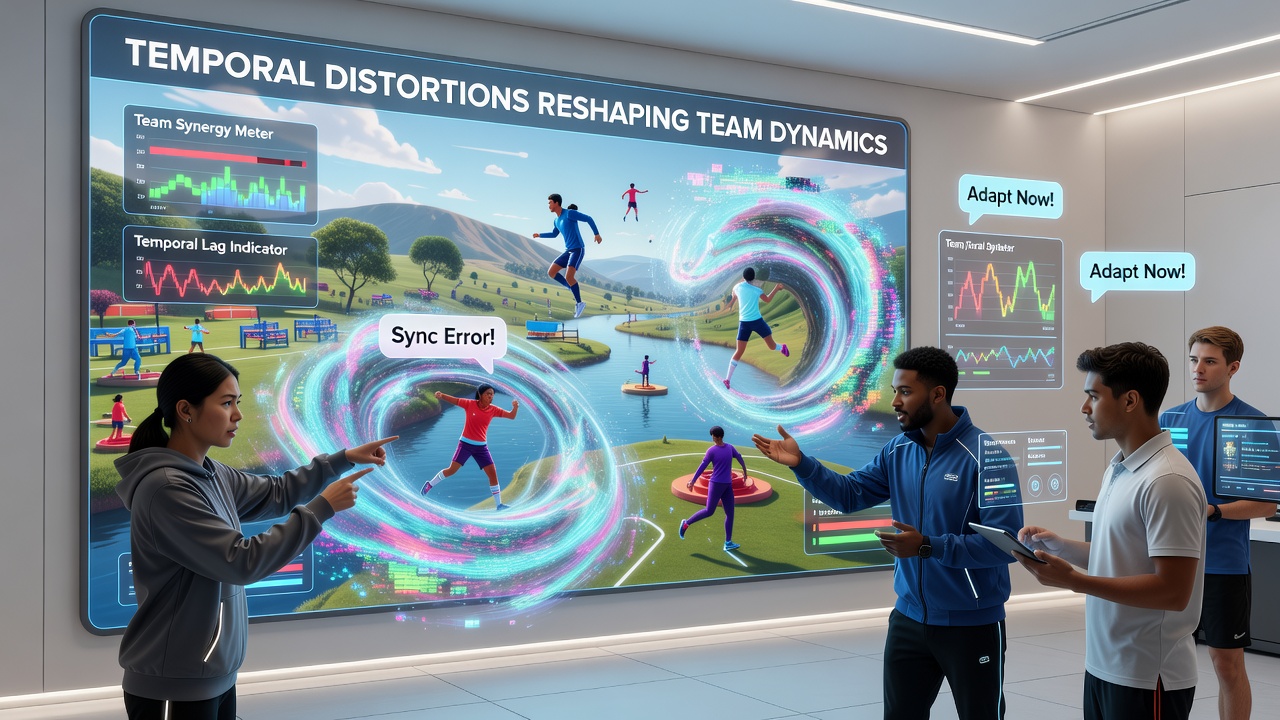
What's notable is the emergence of role specialization around temporal events, where certain members become designated "time anchors" responsible for initiating loops while others focus on spatial navigation during altered time states. This division appears in titles released or updated in 2026, where adventure segments require teams to traverse shifting environments that only stabilize when distortions align across the group. Figures from the Interactive Software Federation of Europe indicate that browser titles featuring these layered mechanics retain users longer than standard multiplayer sports simulations, partly because repeated time events create natural breakpoints for strategy adjustment without leaving the session.
Observed Effects on Match Outcomes
Telemetry collected across several platforms reveals that matches incorporating synchronized temporal distortions produce tighter score distributions, with fewer blowouts and more instances of comebacks driven by coordinated rewinds. Teams that pre-assign distortion responsibilities during loading screens demonstrate faster recovery from positioning errors, whereas groups that improvise on the fly show increased error rates once multiple time layers overlap. Developers have responded by adding visual indicators that highlight active distortion zones to all participants simultaneously, reducing the information asymmetry that previously favored players with faster connections.
Browser performance constraints also shape how these mechanics deploy, since client-side rendering must handle variable latency while keeping time events consistent for every participant. Studios therefore limit distortion duration and scope, which in turn encourages tighter team formations rather than spread-out exploration typical of pure adventure modes. Data collected through August 2026 confirms that titles enforcing these limits see higher rates of repeated play among groups that practice together regularly.
Conclusion
Temporal distortion systems continue to evolve within browser-hosted free sports adventure games, and their integration prompts ongoing adjustments in how teams structure communication, assign roles, and interpret shared visual data. Reports from multiple regions document steady growth in both player numbers and session length as these features mature, with platform updates in 2026 focusing on clearer synchronization tools. The patterns observed so far suggest that future iterations will further embed time manipulation into core team objectives rather than treating it as an optional layer.