Synthetic Rivals: AI Companions Enhancing Solo Play Within Free Browser Multiplayer Environments
Paul Patterson · Jul 29, 2026
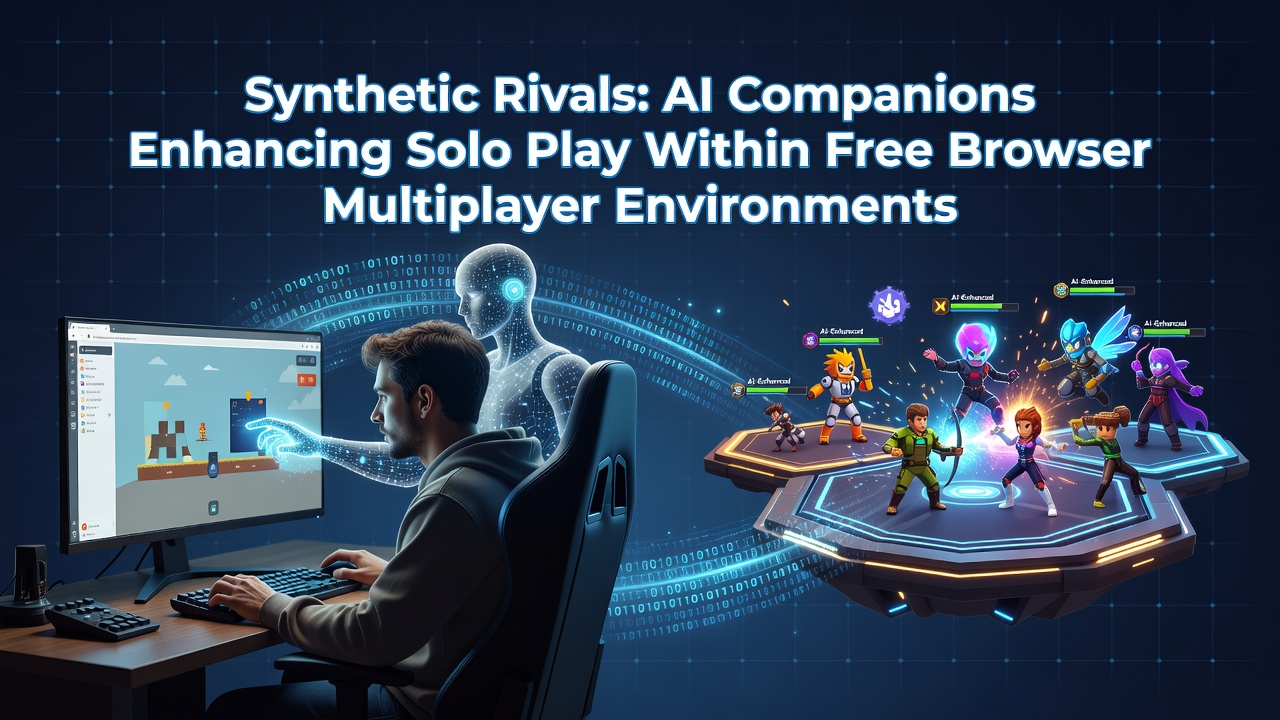
Synthetic Rivals: AI Companions Enhancing Solo Play Within Free Browser Multiplayer Environments
Free browser multiplayer environments have expanded rapidly over the past decade, and AI companions now function as synthetic rivals that fill competitive or cooperative roles when human participants are unavailable. These systems operate within the same server architectures as standard multiplayer sessions, allowing players to enter lobbies or matches solo while the artificial agents maintain game balance and pacing. Developers integrate machine learning models directly into client-side scripts that run in standard web browsers, which reduces latency and keeps resource demands low enough for devices without dedicated graphics hardware. The AI agents observe player actions in real time, adapt movement patterns, and adjust difficulty parameters based on session data collected across thousands of prior matches.Integration Mechanisms in Browser Architecture
Browser-based multiplayer titles rely on WebSocket connections and lightweight JavaScript frameworks to synchronize states between clients and servers. Synthetic rivals plug into these same data streams, receiving identical position, health, and resource updates that human players receive. This shared pipeline lets the AI respond to dynamic events such as item spawns or environmental changes without requiring separate game instances.
Research from the University of Waterloo indicates that adaptive opponent modeling in browser environments can maintain engagement metrics comparable to human-only sessions when the AI receives continuous feedback from live match telemetry. The models update weights after each round, refining prediction accuracy for player intent and preferred strategies.
Player Engagement Patterns Observed in 2026
Industry reports compiled through June 2026 show increased solo session lengths in free-to-access browser titles that feature AI companions. Data collected by the Entertainment Software Association reveals that participation rates in hybrid solo-multiplayer modes rose notably during the first half of the year, particularly in puzzle-action and strategy hybrids that support quick browser entry.
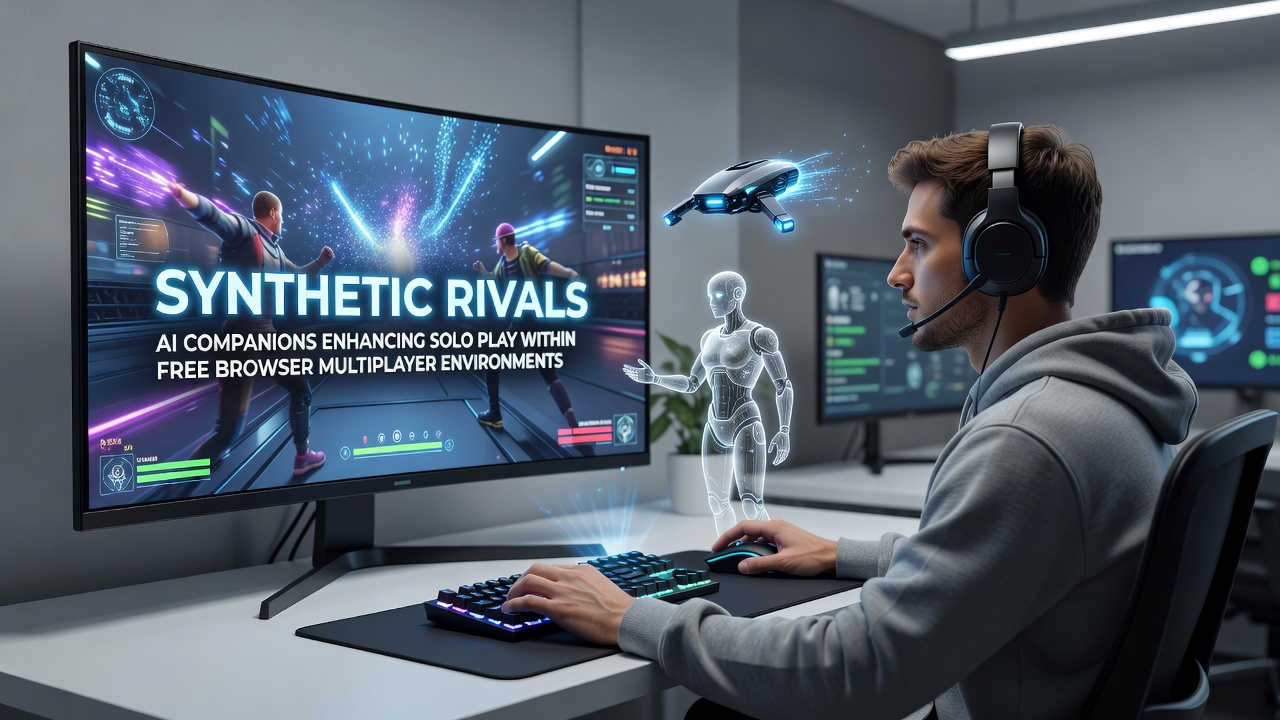
One documented implementation involves AI agents that mirror common team formations while leaving strategic decision points open for the solo participant. These agents occupy lanes or objectives in racing and sports simulations, which prevents empty maps and preserves competitive tension. Observers note that such layering keeps the underlying multiplayer infrastructure active even during off-peak hours when fewer human users log in simultaneously.
Technical Constraints and Solutions
Browser security sandboxes limit direct hardware access, so developers train AI models offline before compressing them into WebAssembly modules that execute efficiently within the client. This approach caps model complexity yet still permits real-time inference on mid-range laptops and tablets. Memory budgets typically stay under 50 megabytes per agent, allowing multiple synthetic rivals to coexist alongside standard multiplayer traffic.
Network synchronization protocols treat AI outputs as additional player inputs, which means server-side validation remains uniform across human and artificial participants. This uniformity simplifies anti-cheat systems and reduces the need for separate code paths. European research groups, including those affiliated with the Technical University of Munich, have published findings on compression techniques that preserve behavioral diversity while meeting these size restrictions.
Community and Design Implications
Game designers adjust matchmaking algorithms to account for mixed human-AI lobbies, weighting factors such as agent skill ratings alongside traditional metrics like ping and playtime history. Players who prefer solo entry can toggle companion density or specialization before queuing, which influences how the system populates remaining slots with either additional humans or further AI instances.
Case examples from established browser platforms illustrate that synthetic rivals reduce queue abandonment rates by providing immediate match starts. The agents also serve as training tools, allowing newcomers to practice mechanics against predictable yet evolving opposition before entering full human competitions.
Conclusion
Synthetic rivals have become a structural component of free browser multiplayer environments by bridging gaps between solo access and group dynamics. Their implementation through lightweight browser technologies, combined with ongoing refinements from academic and industry research, supports sustained participation across varied player schedules and connection qualities. As of July 2026, these systems continue to evolve within the same technical constraints that define web-based gaming, maintaining compatibility while expanding the range of viable solo experiences.