Synchronizing Inputs Across Hybrid Browser Experiences in Multiplayer Sports Simulations
Paul Patterson · Aug 17, 2026
Synchronizing Inputs Across Hybrid Browser Experiences in Multiplayer Sports Simulations
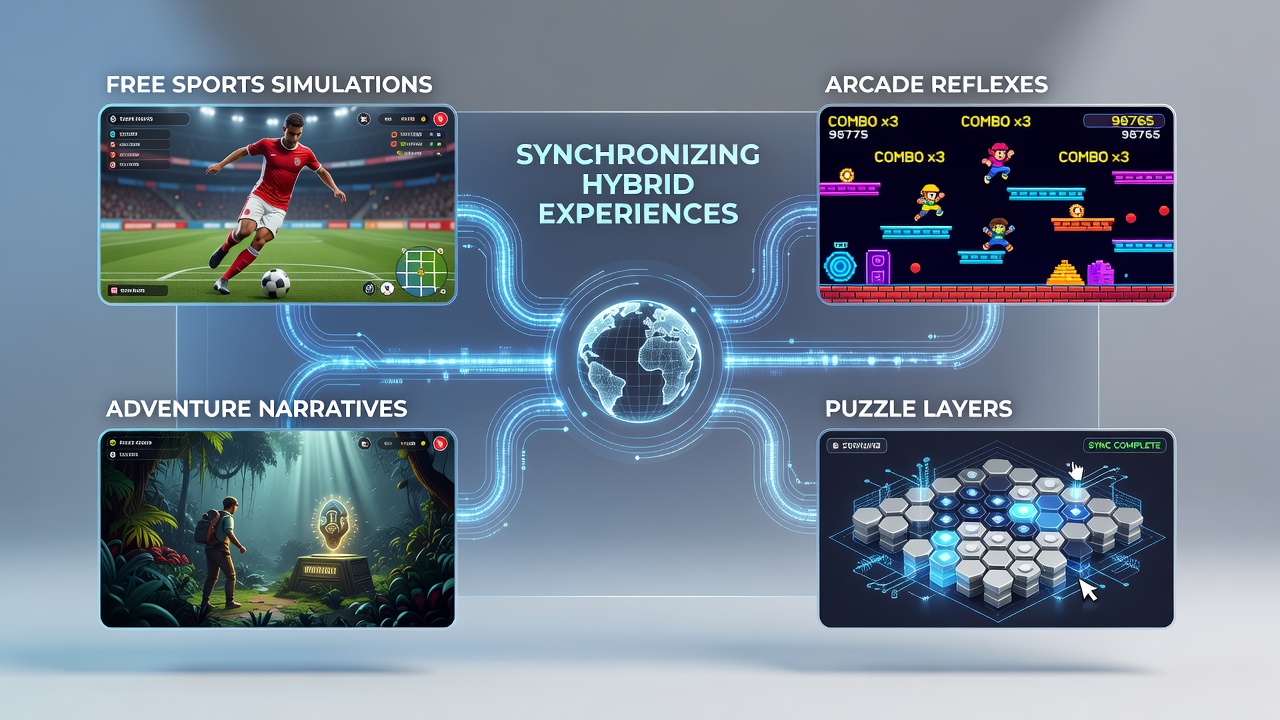
Browser-based multiplayer platforms have expanded to incorporate free sports simulations that blend arcade reflexes with adventure narratives and puzzle layers, which requires precise input synchronization across distributed user sessions. Developers rely on WebSocket protocols combined with client-side prediction to manage real-time data streams while accounting for variable network latencies that affect collective gameplay outcomes. Research from the Entertainment Software Association indicates that participation in such hybrid titles grew steadily through 2025 with further projections extending into August 2026 as browser engines improve support for low-latency features.
Core Mechanisms for Input Alignment
Input alignment begins with timestamped event packets that travel between clients and authoritative servers, allowing reconciliation algorithms to resolve discrepancies when players execute rapid arcade maneuvers alongside strategic puzzle decisions. Systems often employ dead reckoning techniques where local simulations project future states based on last received data, then correct positions once authoritative updates arrive. Observers note that these methods reduce visual jitter during team-based athletic sequences while preserving narrative progression points triggered by collective puzzle solutions. Data from industry reports shows that titles using hybrid reconciliation report engagement metrics that remain stable across sessions involving up to sixteen concurrent participants.
Integration of Genre-Specific Layers
Free sports simulations intersect with arcade reflexes through immediate response loops that feed into slower adventure decision trees and layered puzzle constraints. Each layer demands distinct synchronization priorities where reflex actions receive higher packet priority than narrative branches, yet puzzle states must maintain consistency to prevent desynchronized team progress. Experts have documented cases where mismatched timing between these layers leads to rollback events that reset puzzle elements without disrupting ongoing athletic plays. Studies conducted at technical institutions reveal that weighted priority queues can maintain coherence across all components when bandwidth allocation adapts dynamically during peak multiplayer loads.
Challenges in Distributed Multiplayer Environments
Network variability continues to pose obstacles when players operate from diverse geographic regions, prompting the adoption of regional relay servers that aggregate inputs before forwarding consolidated states to the central authority. Adventure narrative checkpoints require strict ordering to avoid branching conflicts, whereas arcade reflex events tolerate minor desynchronization compensated by visual smoothing. Researchers discovered that incorporating adaptive tick rates based on average latency measurements helps sustain fluid interactions across mixed genre sessions. Figures from academic analyses indicate that such adjustments lowered desync incidents by measurable margins in tested browser deployments through mid-2025.
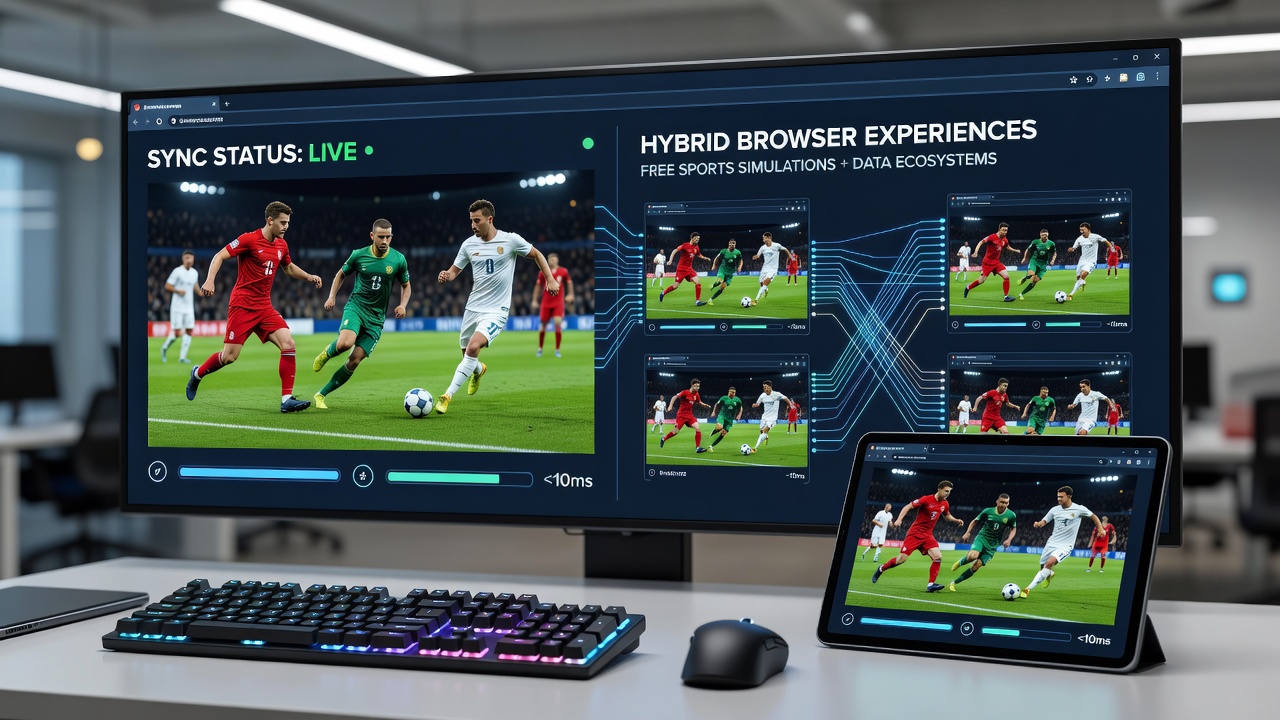
Additional hurdles arise from browser security sandboxes that limit direct hardware access, which forces developers to route inputs through standardized APIs while preserving low overhead. Puzzle layers often involve state machines shared among participants, requiring atomic updates that prevent partial resolutions during simultaneous submissions. Those who have examined production logs report that combining deterministic simulation with selective authoritative overrides keeps hybrid experiences stable even when one player experiences temporary connection degradation.
Technological Developments Anticipated for 2026
Standards bodies continue to refine WebTransport protocols that promise reduced handshake overhead compared with existing WebSocket implementations, which could benefit hybrid titles by accelerating input propagation during intense multiplayer sequences. In August 2026 industry observers anticipate demonstrations of enhanced prediction models that incorporate machine learning to anticipate player patterns across sports simulations fused with adventure and puzzle components. These models would adjust reconciliation windows dynamically based on historical session data without exposing individual inputs to other participants. Academic papers presented at prior conferences already outline frameworks that separate reflex timing from narrative state management while maintaining overall session integrity.
Practical Implementation Patterns
Development teams structure input handlers to categorize events by genre priority before transmission, routing arcade reflexes through dedicated channels that bypass heavier adventure payload processing. Puzzle interactions receive validation against shared state hashes to confirm collective agreement before advancing story segments. Case examples from deployed browser titles demonstrate that separating these channels allows independent scaling when player counts increase during evening peak hours. Data indicates that such modular designs also simplify debugging when desynchronization occurs in one layer without cascading into others.
Conclusion
Input synchronization in these hybrid browser settings depends on layered protocols that balance speed for arcade elements against consistency for puzzle and narrative components within free sports simulations. Continued refinements in browser APIs alongside evolving server architectures support sustained multiplayer participation through periods of network fluctuation. As August 2026 approaches, documented progress in protocol efficiency points toward broader adoption of these synchronized experiences across additional genre combinations.