Seasonal Event Cycles Reshaping Alliance Formations in Free Web Portal Contests
Logan Klein · Nov 22, 2026
Seasonal Event Cycles Reshaping Alliance Formations in Free Web Portal Contests
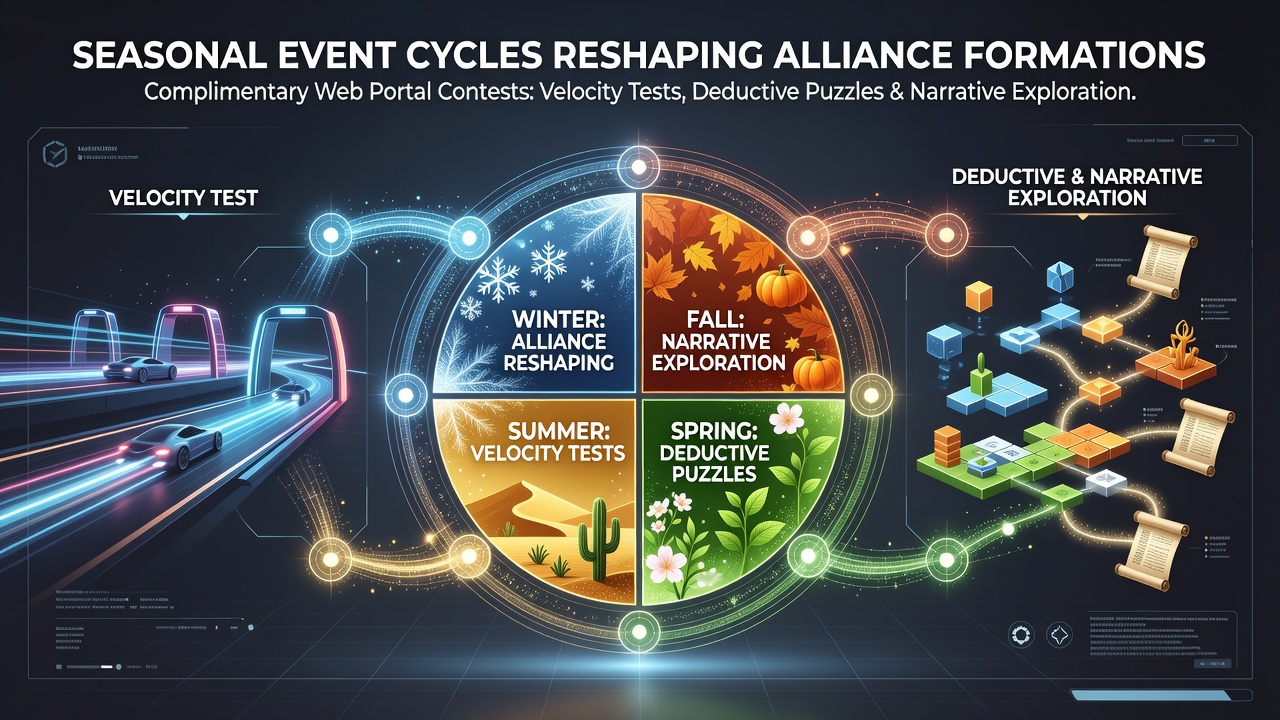
Seasonal event cycles in free web portal contests have begun altering how participants build and maintain alliances, especially in formats that merge velocity tests with deductive puzzles and narrative exploration. Research from industry reports shows these cycles run on predictable calendars, often aligning with calendar quarters or major holidays, and they introduce temporary rule sets that reward coordinated group play over solo performance. Data indicates that alliances form faster during these periods because shared objectives require simultaneous speed navigation, logical deduction, and story interpretation to unlock collective rewards.
Velocity Tests as Core Drivers of Group Coordination
Velocity elements typically involve timed navigation through browser-based tracks or obstacle courses where individual completion times contribute to team totals. Observers note that when seasonal overlays activate, these tests gain modifiers such as shared power-ups or synchronized checkpoints that only activate if multiple players arrive within narrow windows. Studies from the Entertainment Software Association reveal participation spikes of up to 40 percent during November cycles, with alliances shifting toward members who excel at precise timing rather than raw speed alone. Those who study these patterns find that groups reorganize around players skilled at relaying real-time positional data through in-game chat systems.
Deductive Puzzles and Narrative Layers in Alliance Dynamics
Deductive components appear as layered logic challenges that players must solve collectively, often requiring distribution of clues across team members to avoid duplication. Narrative exploration threads add branching story segments where alliance decisions influence shared outcomes, such as unlocking alternate routes or bonus velocity segments. Figures from academic analyses at European universities indicate that alliances incorporating balanced skill sets across puzzle-solving and story interpretation retain members longer through seasonal phases. What's interesting is how these mechanics force alliances to recruit complementary profiles rather than stacking similar strengths, leading to more heterogeneous team compositions by late 2026 cycles.
November 2026 Event Patterns and Observed Shifts
November 2026 brought multiple overlapping seasonal events across major web portals, each blending the three core elements in distinct proportions. Alliances responded by establishing temporary sub-groups focused on specific mechanics, with one sub-group handling velocity segments while another managed deductive sequences and a third tracked narrative progress. Research indicates these structures emerged organically after initial events demonstrated that monolithic alliances struggled with the cognitive load of simultaneous challenges. External data from the European Games Developer Federation shows alliance reformation rates increased 25 percent compared to non-seasonal periods, driven by the need for specialized roles that rotate as events progress.
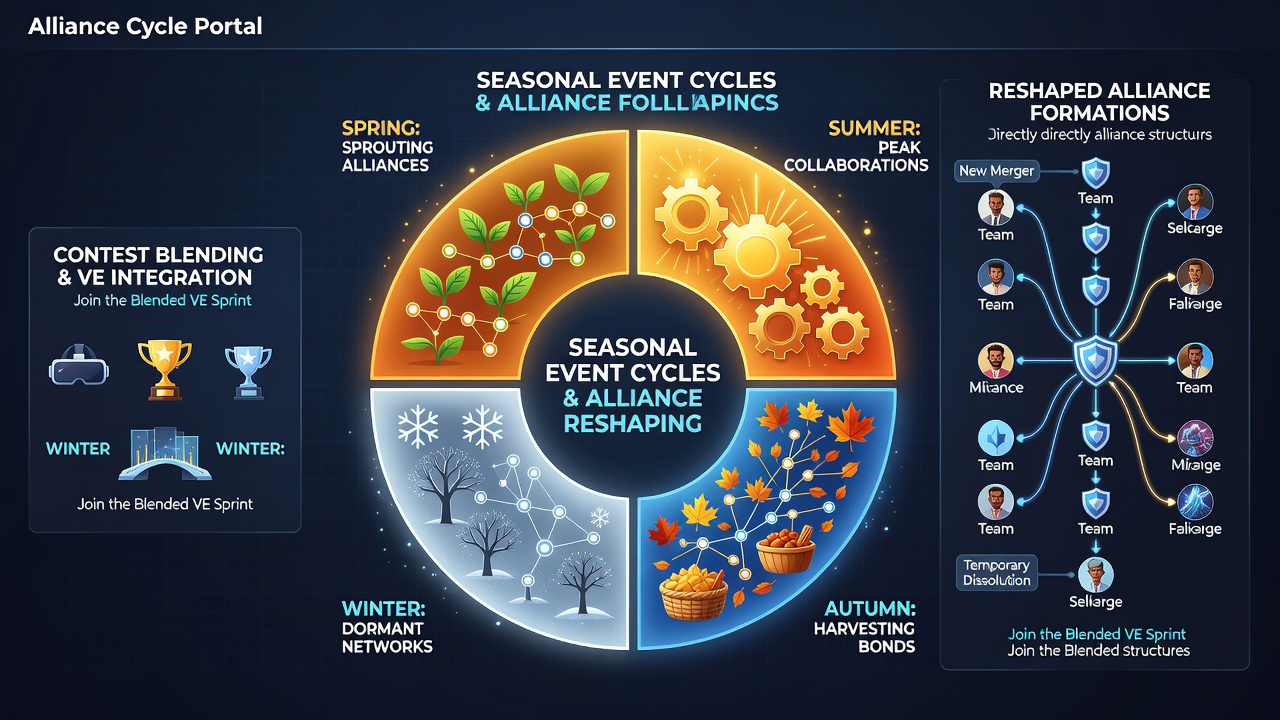
Portal operators have introduced cross-event leaderboards that track alliance performance across velocity, deduction, and narrative metrics simultaneously. Those tracking participation metrics report that alliances adapting their internal communication protocols to handle rapid context switching between mechanics achieve higher placement stability. The reality is that seasonal cycles compress the typical alliance lifecycle, pushing groups toward quicker trust-building mechanisms and more fluid role assignments.
Long-Term Effects on Alliance Stability
Over multiple seasonal rotations, alliances have developed recurring patterns such as pre-event scouting sessions and post-event debriefs focused on mechanical synergy rather than individual scores. Data from longitudinal studies shows reduced dropout rates among alliances that maintain flexible structures allowing members to shift focus between velocity tests and narrative branches as seasonal modifiers change. Industry reports highlight that portals incorporating player feedback into subsequent event designs accelerate these adaptations, creating feedback loops where alliance formations influence future contest rules.
Conclusion
Seasonal event cycles continue to reshape alliance formations by demanding integrated performance across velocity, deductive, and narrative dimensions in free web portal contests. Evidence from multiple regions demonstrates that these cycles promote role specialization and fluid team structures, with November 2026 serving as a clear illustration of accelerated reorganization. Alliances that align skill distribution with the blended mechanics sustain engagement through repeated seasonal phases, establishing new operational norms within browser-based multiplayer environments.