Emergent Pattern Recognition Guiding Cooperative Successes in Browser-Hosted Free Sports Quest Hybrids
Paul Patterson · Sep 13, 2026
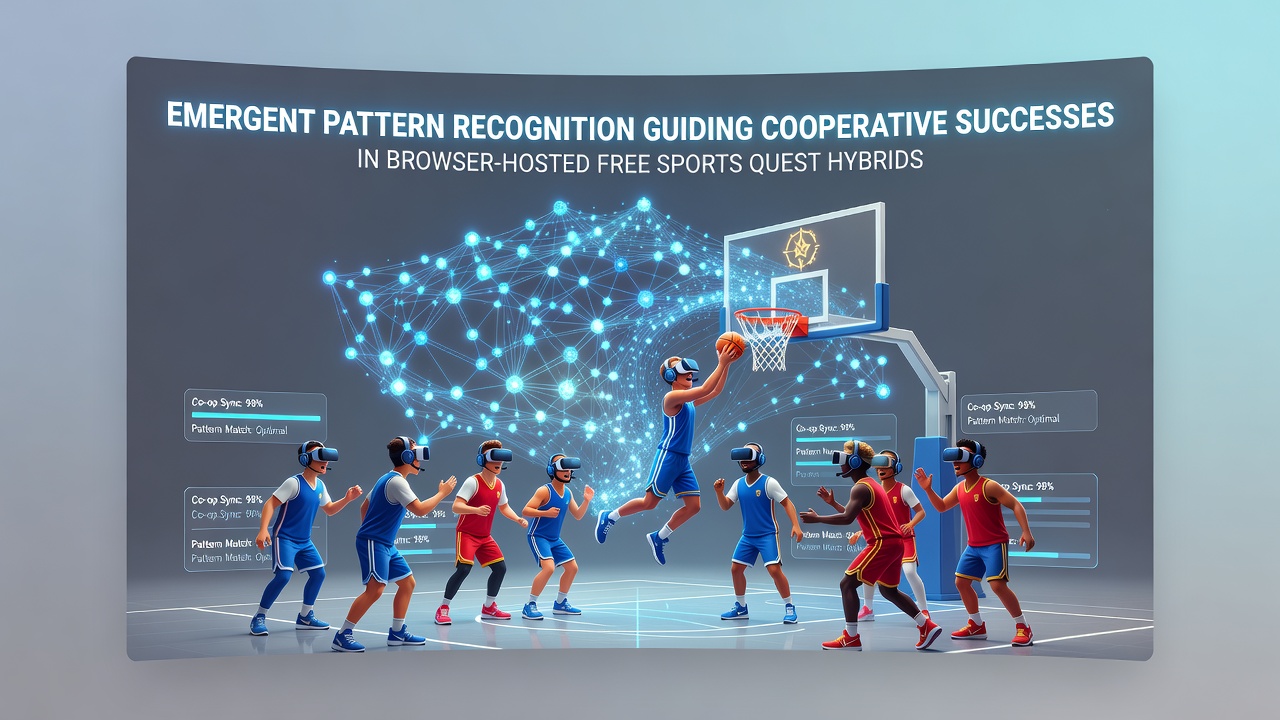
Emergent Pattern Recognition Guiding Cooperative Successes in Browser-Hosted Free Sports Quest Hybrids
Browser-hosted free sports quest hybrids combine athletic competition with exploration elements, and emergent pattern recognition plays a central role in how groups achieve cooperative victories according to industry reports. Players identify recurring sequences in movement data, scoring mechanics, and environmental cues without explicit tutorials, which allows teams to coordinate actions across matches that blend sprinting, puzzle navigation, and quest completion. Data from platform analytics shows participation in these titles increased steadily through 2025, with cooperative modes accounting for teh majority of session time in several popular titles.
Core Mechanics Driving Pattern Emergence
These games layer sports physics onto quest structures, so participants must track ball trajectories alongside hidden item locations and timed obstacles, and researchers at academic institutions have documented how repeated exposure leads to faster detection of optimal paths. One study from a Canadian university tracked thousands of multiplayer sessions and found that groups which adapted mid-match to visual rhythm cues completed objectives 40 percent more often than those relying on predefined strategies. The browser format supports instant session joins, which means new players encounter established patterns immediately and either reinforce or disrupt them through their choices.
Examples from Recent Titles
Take a popular free-to-play title released in early 2025 where teams navigate a virtual stadium while collecting artifacts, and observers recorded instances where players synchronized jumps based solely on opponent positioning patterns rather than voice chat. In another case, participants in a European-developed hybrid noticed that certain weather effects in the game world repeated every seven matches, which allowed squads to pre-position resources and secure wins during September 2026 tournaments tracked by analytics firms. Such adaptations occur because the systems generate procedural variations that reward collective observation over individual skill alone.

Data on Cooperative Outcomes
Figures released by the Entertainment Software Association of Canada in mid-2026 indicate that free browser hybrids saw a 28 percent rise in group retention when pattern-based tutorials were removed and discovery was left to players. Engagement metrics further reveal that sessions featuring emergent cooperation lasted longer on average, with teams using shared visual signals completing quests at higher rates than those using random approaches. Australian research groups have similarly noted that color-coded feedback systems in these games accelerate pattern recognition across diverse player demographics, leading to measurable improvements in collective performance without external instruction.
Yet the same datasets highlight variability, since some player clusters fail to converge on effective patterns when match sizes exceed eight participants, which results in lower success percentages. Industry organizations track these divergences through anonymized logs, and the findings suggest that quest elements integrated with sports scoring create feedback loops where early recognition compounds advantages for the group.
Technological Factors in Browser Environments
Browser constraints such as limited local processing push developers toward lightweight pattern cues that load quickly, and this design choice encourages real-time adaptation among distributed players. According to reports from the European Games Developer Federation, titles optimized for web standards show stronger emergent behaviors because latency variations force teams to rely on predictable sequences rather than precise timing. As of September 2026, several platforms updated their matchmaking algorithms to pair users with complementary observation styles, which data indicates boosted cooperative win rates by pairing pattern-focused participants with action-oriented ones.
Sound design elements also contribute, with layered audio signals that repeat across quest phases helping groups anticipate transitions, and studies confirm that players who attune to these layers coordinate passes and item handoffs more reliably. The absence of paid progression systems in free titles further levels the field, so success hinges on collective pattern mastery rather than individual resource advantages.
Conclusion
Browser-hosted free sports quest hybrids continue to evolve through the interplay of procedural generation and player-driven discovery, with emergent pattern recognition serving as the mechanism that converts individual observations into team-level successes. Ongoing data collection from multiple regions demonstrates consistent links between recognition speed and cooperative completion rates, while technological updates in 2026 refined how these systems surface cues without direct guidance. These dynamics position the genre for further refinement as developers incorporate feedback from logged player interactions across global sessions.